
Recursive Flint: The Free Coding Model That Runs on a Laptop, and Was Mostly Built by AI
Recursive Flint is a free, Apache 2.0 coding model that runs offline on a laptop. What it does, how fast it is, its limits, and what it means for developers.
Recursive Flint is a free, Apache 2.0 coding model that runs offline on a laptop. What it does, how fast it is, its limits, and what it means for developers.
OpenAI models on Google Cloud arrive in Model Garden within weeks, with Codex and existing spend commitments. Here is what builders and IT buyers should know.
MiniMax M3.1 Flash is out on the MiniMax API at $0.15 per million input tokens and 200+ tokens a second. Here is what it does, what it costs and how it compares.
Mercury 3 from Inception Labs is a diffusion language model that writes over 1,000 tokens per second, with a 1M-token context and prices from $0.20 per million.
Sam Altman has confirmed an OpenAI humanoid robot is in the works, with a demo expected in 2027 and 27 robotics jobs open. Here is what we know and what we don't.
Replit Agent now runs on OpenAI models by default. CEO Amjad Masad cites cost and performance, while Claude stays available as an option for users.
DeepSeek V4.1-Flash-1017 brings higher agent benchmark scores, open weights and a paid Search and Fetch API. Here is what changed and what it costs to use.
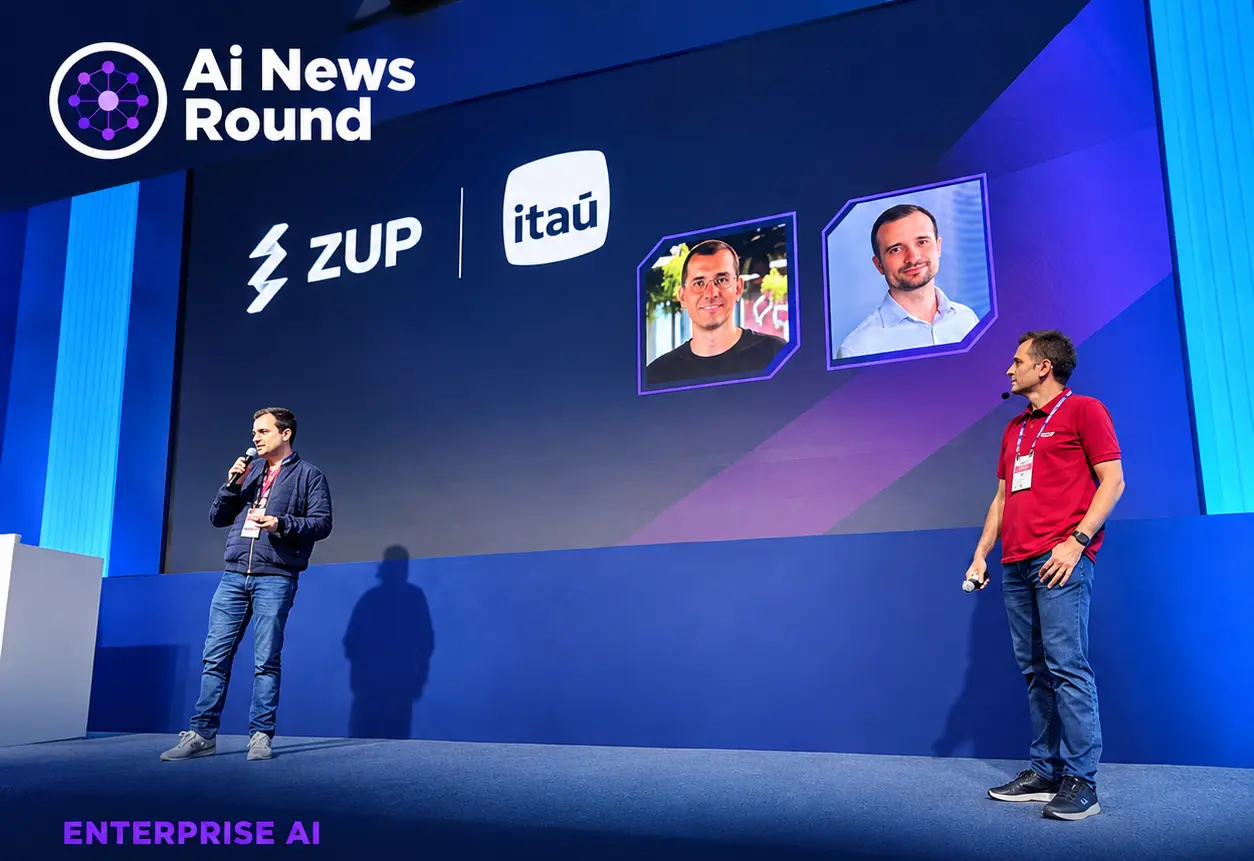
Latin America’s largest private bank, Itaú Unibanco, is deploying a unified generative AI platform to serve its 70 million customers. By pairing AWS cloud architecture with strict internal governance, the institution is scaling digital-agent services while maintaining enterprise compliance and client trust.
Meta Superintelligence Labs has launched Muse Spark Open, an 816-billion-parameter open-weight Mixture-of-Experts model featuring 42 billion active parameters and a 1-million-token context window. Optimized for agentic coding and native multimodal processing across text, audio, image, and video, the model introduces hardware optimizations for local and cloud infrastructure.
Black Forest Labs has released FLUX.3 Image Klein, a 5.6-billion-parameter open-weight image generation and editing model. Arriving with day-one integration in Hugging Face’s Diffusers library, the architecture combines multi-reference image conditioning, coordinate-based bounding box layout controls, and Qwen3-VL text encoding.
A satirical experiment by creator Graham Dot Zip exposing the breakdown between an AI job candidate and an AI recruiter reveals deep risks in delegation. When autonomous bots hallucinate qualifications, undercut reservation prices, and commit without human approval, simple agentic workflows quickly become financial liabilities.
Artificial intelligence startup Reflection AI has released Beam, an open-weight sparse Mixture-of-Experts model boasting 501 billion total parameters and 23 billion active parameters. Released under an Apache 2.0 license, Beam is optimized for code synthesis, complex reasoning, and long-horizon agentic workflows.
Following warnings from AI Minister Kanishka Narayan regarding potential cyber breaches, the UK government has announced plans for mandatory safety reporting and tighter controls on frontier AI models. Former MI6 Director Nigel Inkster weighs in on national vulnerability and the reality of AI-driven cyber threats.
A formal verification study by independent researcher Adarsh Agrawal demonstrates that providing correctness feedback during completeness audits in Verus inadvertently erases evidence of incomplete contracts. The paper introduces a phase-separated workflow that more than doubles certified witness discovery rates.
Global management consultancy McKinsey & Company has introduced a 10-minute AI avatar exercise for North American entry-level applicants. Designed to simulate realistic client interactions, the tool challenges candidate reasoning while human evaluators retain full hiring authority.
Get a notification when something new is published.
Done. To stop them later, use the notification settings for this site in your browser.