From Manual Labour to Machine Training Data
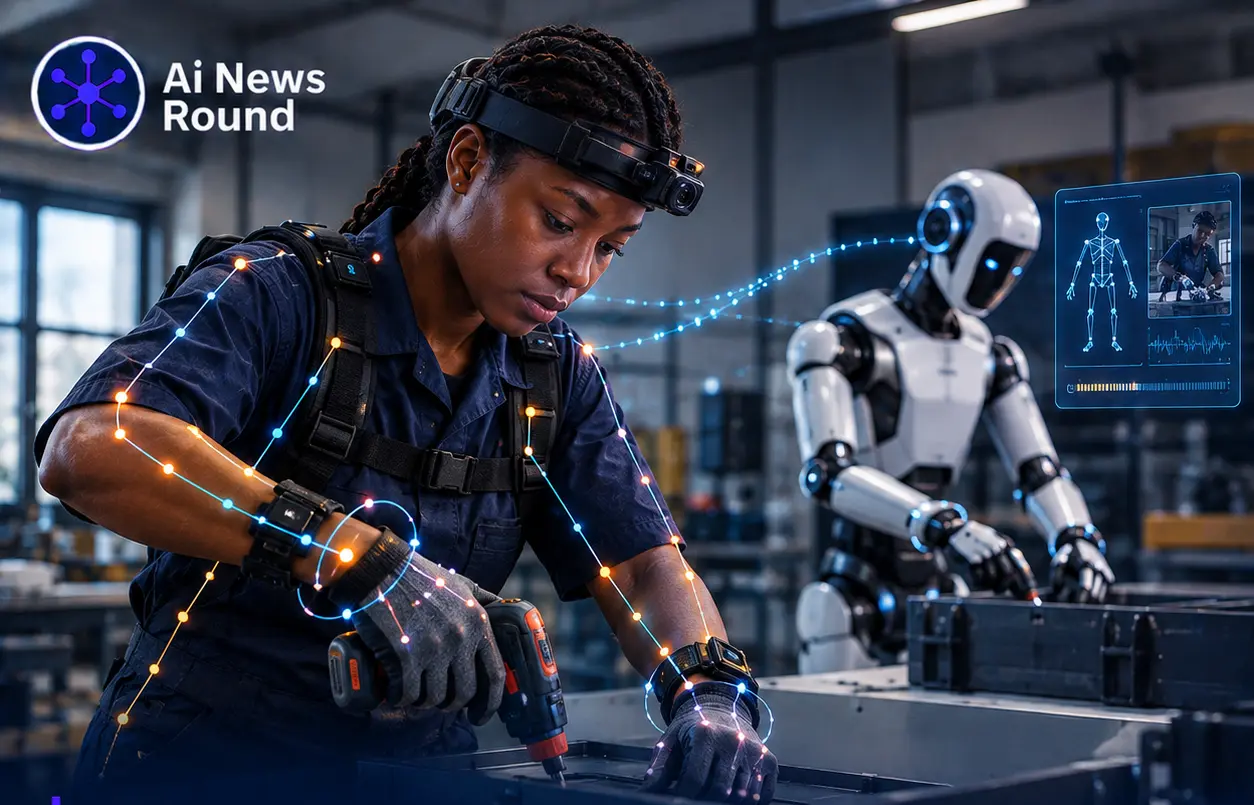
Human work is undergoing a fundamental structural transformation as physical actions are converted into machine-readable datasets. In factories, kitchens, warehouses, and assembly lines, workers are equipped with chest rigs or head-mounted cameras to film their daily routines from a first-person perspective. These recordings capture intricate micro-decisions, fluid tool manipulations, adjustments, and muscle memory that workers execute instinctively. Rather than serving merely as workplace surveillance or documentation, these efforts capture human physical intelligence and convert it directly into digital assets for artificial intelligence platforms.
The Data Demands of Embodied AI
Teaching robotics systems to operate in unstructured physical environments requires vastly more than traditional software instructions or textual descriptions. Physical tasks contain nuanced, tacit knowledge that is nearly impossible to articulate verbally—such as modulating grip strength, feeling tactile resistance, adjusting pressure, or recovering smoothly from minor physical errors. While humans perform these subtle adjustments without deliberate thought, robotic platforms lack these physical instincts. To bridge this gap, robotics development depends heavily on learning by demonstration. Industry estimates indicate that robotics laboratories will require between 100 million and 1 billion hours of egocentric training data over the coming years to effectively train artificial intelligence systems to perform complex physical activities.
Dual Outputs and the Shifting Economics of Work
This emerging paradigm alters the fundamental economic relationship between the worker and the workplace by establishing two distinct outputs for every task performed:
- Immediate Physical Output: The worker produces a physical product, prepares food, or completes a logistical service that generates commercial value today.
- Long-Term Data Asset: The worker simultaneously creates behavioural and kinematic training data capturing how the task was completed.
While the physical product generates immediate revenue, the underlying training dataset can be monetised, deployed, and scaled across automated systems for years. Consequently, human labour is transformed from an operational expense into the raw material powering long-term machine capabilities.
Ownership, Redistribution, and Future Governance
As physical intelligence is transferred from human workers to autonomous hardware, dramatic increases in industrial productivity become possible. However, higher productivity does not inherently lead to shared economic prosperity. The collection of human physical data raises complex societal and legal questions regarding who owns the resulting datasets and who captures the value generated by subsequent automation. Discussions surrounding data royalties, universal basic income (UBI), and alternative equity models are emerging to address this gap. Ultimately, the primary challenge of future automation may not be solving the technical hurdles of robotic control, but establishing fair mechanisms to distribute the economic abundance that human-trained machines produce.