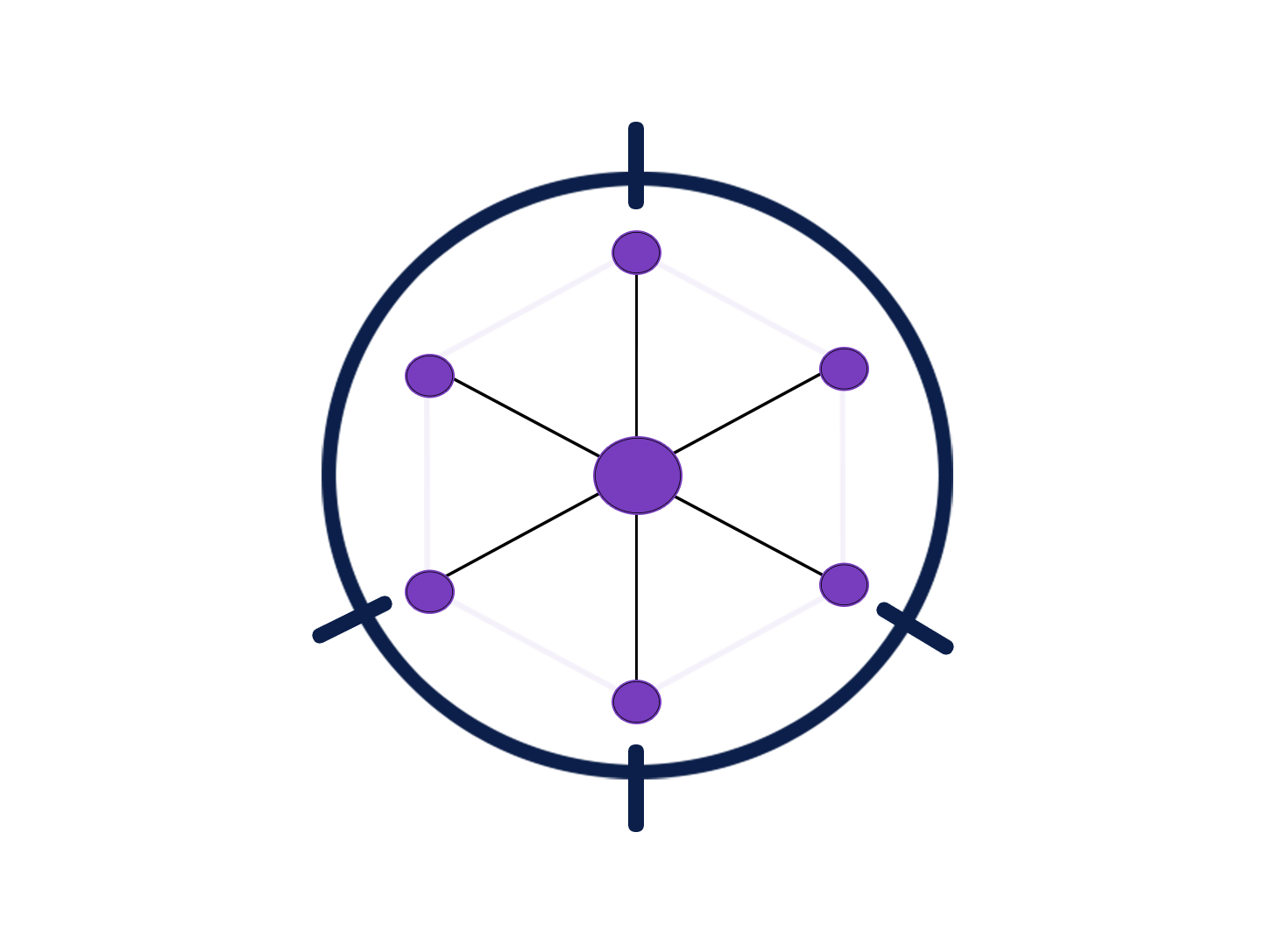
Apple and Meta are working together to run Meta's largest open-weight model on clusters of Mac Studio computers, CNBC reported on October 15, 2026. The work is at an early stage and neither company has announced a product. Still, the plan to run Muse Spark Open on Mac Studio clusters is worth looking at closely, because it points to a different way of serving frontier-scale models: on hardware a company can buy, own and put in a cupboard, rather than on rented cloud GPUs.
What is Muse Spark Open?
Muse Spark Open is Meta's open-weight multimodal model, released this month. It is a mixture-of-experts (MoE) model with 816 billion parameters in total. In an MoE design, only a fraction of those parameters are active for each token, which keeps the compute needed per answer far below what the headline number suggests. Memory is a different story. All 816 billion parameters still have to be loaded somewhere, and that is the hard part of running the model outside a data centre. We covered the release in detail in Meta Releases Muse Spark Open: 816B Parameter Open-Weight Multimodal MoE Model.
Meta's smaller Muse Glimmer model came out in August 2026 under the Apache 2.0 licence. Spark Open is the much larger sibling, aimed at teams who want frontier-level output without sending data to a closed API.
Why Mac Studios?
Apple's high-end chips use unified memory, which the CPU and GPU share. A single top-spec Mac Studio can hold far more model weights in memory than a typical consumer graphics card. Link several of them over a fast connection and you can split a very large model across machines, with each one holding part of the weights.
Developers have been doing this informally for a while, using open-source tools to chain Macs together for local inference. What is new is that Apple and Meta are reported to be working on it directly. That suggests official support, tuned software and possibly a reference setup that businesses could buy and deploy without stitching it together themselves.
What each company gets out of it
For Apple, this is a hardware story. Mac revenue reached $10.4 billion in Apple's fiscal third quarter, up 29% from a year earlier, and AI workloads are part of the reason. If the Mac Studio becomes a standard box for private AI inference, Apple sells more of its most expensive desktop machines into offices, labs and agencies. John Ternus, who took over from Tim Cook as chief executive on September 1, came up through Apple's hardware engineering teams, and a deal like this fits that background.
For Meta, it is about reach. Meta does not sell cloud inference the way Microsoft, Google and Amazon do. It releases open weights and depends on others to run them. Every new place Muse Spark Open can run is another place where Meta's model, and not a rival's, becomes the default. Meta also plans to spend between $130 billion and $145 billion on capital projects in 2026, much of it on its own AI data centres. Pushing some inference to customer-owned hardware is a way to spread the cost of serving its models.
Cloud versus owned hardware
The interest in local clusters comes down to cost, control and privacy.
- Cost. Cloud GPU time is billed by the hour and adds up quickly for steady workloads. A cluster of Macs is a one-off purchase. For a team running the model all day, owning the hardware can work out cheaper within a year or two.
- Control. Teams that run open weights on their own machines decide when to update, what to fine-tune and how to log usage.
- Privacy. Law firms, hospitals and banks often cannot send client data to a third-party API. Local inference keeps everything on premises.
There are trade-offs. A Mac cluster will not match a rack of data-centre GPUs on raw speed, especially when many users hit it at once. Splitting a model across machines also adds network delay. For a single team or a modest internal tool, that may be fine. For a public app serving millions of requests, the cloud is still the practical choice.
What this means for teams in Africa
For developers and companies in Africa, local inference has an extra appeal. Cloud GPU capacity in the region is limited, and many teams pay for compute in dollars while earning in local currency. Bandwidth costs and latency to overseas data centres add more friction.
A cluster of Macs is not cheap. But it is a known, fixed cost that can be budgeted once, and it works when the international link is slow. Universities, research labs and larger agencies that already buy Apple hardware could find this route easier to justify than an open-ended cloud bill. The catch is import duties and availability, which vary widely from country to country.
The competitive angle
Analysts at Bank of America have warned that AI agents could put pressure on parts of Apple's business by changing how people reach apps and services. Making the Mac the place where serious open models run gives Apple a stake in AI that does not depend on winning the assistant race. It also gives Meta a partner with millions of capable machines already in offices around the world.
What to watch
The report describes work in progress, so details are thin. Things to look for in the coming months:
- Whether Apple ships official software for clustering Macs for inference
- How many Mac Studios a full Muse Spark Open deployment needs, and at what precision
- Real throughput numbers compared with cloud GPUs
- Whether other open-weight model makers, such as Mistral or Qwen, get similar treatment
If the numbers hold up, "buy a few Macs" could become a serious answer to "where do we run our model?" That would be a real change for teams that want frontier-level AI without handing their data to a cloud provider.
For more on deploying and choosing AI tools, see our Tools & Applications section.