
Regulatory Bottlenecks and the Hong Kong Hardware Stockpile
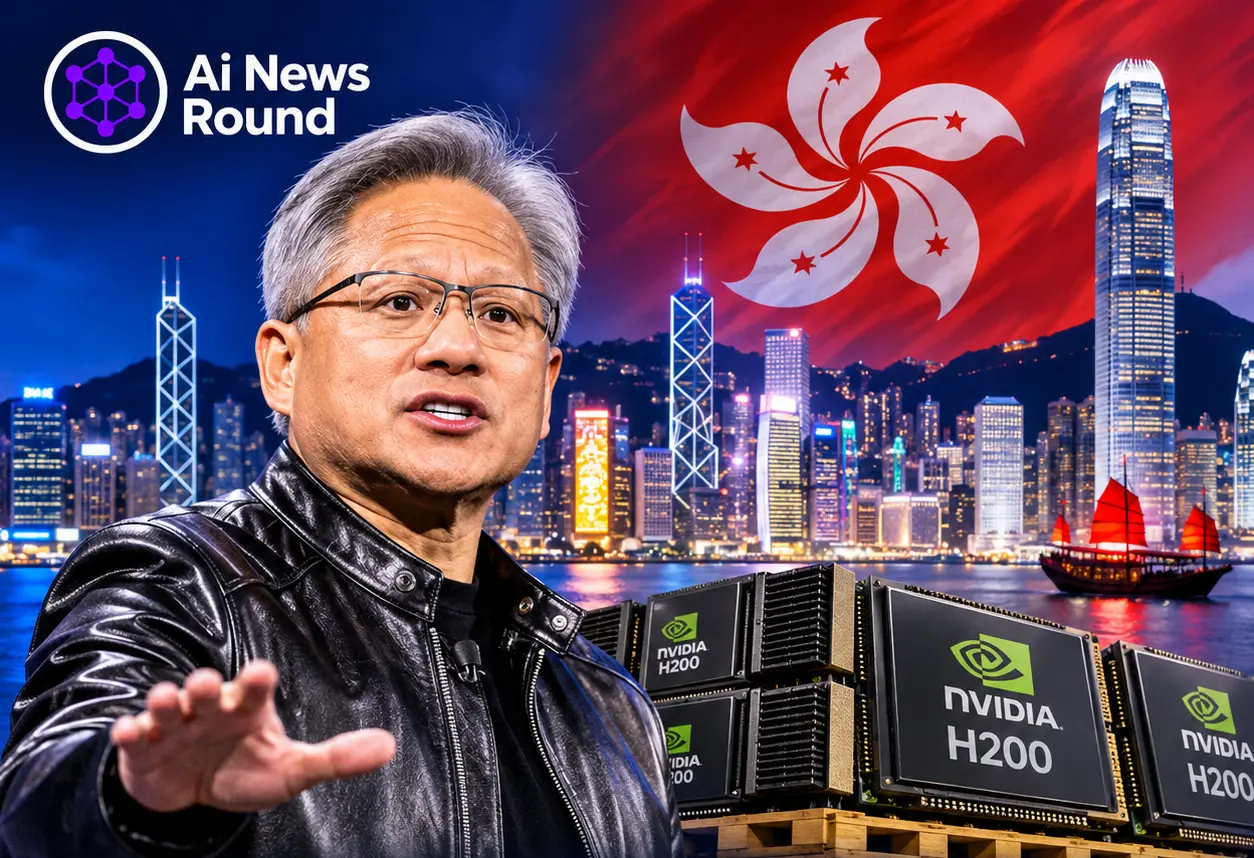
The complex intersection of geopolitical trade restrictions and national technology sovereignty has created a massive logistical backlog in international transit hubs. Approximately 600,000 Nvidia H200 artificial intelligence processors are currently sitting in Hong Kong warehouses, stalled by Beijing's ongoing refusal to clear large-scale imports into mainland China. While Chinese technology enterprises face surging infrastructure demand for generative model training, state regulators are intentionally restricting mass customs clearance to protect domestic semiconductor investments and reduce long-term structural reliance on American hardware.
This regulatory bottleneck has severely squeezed the domestic market, driving black-market prices for an eight-card H200 server past $900,000—roughly triple its cost a year prior. Although small batches and indirect shipments continue to slip through intermediaries, the growing stockpile underscores the acute economic friction between global artificial intelligence advancement and national security policies.
The Trajectory and Constraints of Domestic Semiconductor Alternatives
As long as major Chinese enterprises face restricted access to advanced Western hardware, domestic semiconductor alternatives face a high-stakes trajectory defined by state-mandated substitution and aggressive optimization. With regulatory roadblocks restricting access to top-tier foreign accelerators, domestic champions like Huawei and local silicon designers are capturing a captive, highly motivated domestic market. Major cloud and AI providers that would otherwise default to Nvidia hardware are forced to rewrite software stacks and migrate workloads to domestic chips, supplying local foundries with the continuous capital and scale-testing environment required to accelerate hardware iteration cycles.
Despite strong state backing, domestic alternatives continue to operate under severe structural constraints. Denied access to extreme ultraviolet (EUV) systems, domestic chipmakers rely on multi-patterning deep ultraviolet (DUV) techniques, resulting in lower wafer yields and significantly higher per-chip production costs. Furthermore, while individual domestic processors have made strides in raw compute power, they often lag behind Western counterparts in inter-chip bandwidth. Scaling these accelerators into massive clusters for frontier model training introduces greater latency, higher power consumption, and increased cluster management overhead.
To compensate for these hardware gaps, Chinese tech labs are splitting their computational strategies. Domestic silicon is increasingly capable of managing large-scale model inference efficiently, assisted by aggressive software quantization and on-device optimization. However, for massive foundational model pre-training—where high-bandwidth memory and interconnect speed are non-negotiable—domestic hardware still trails. Consequently, Chinese labs are pioneering algorithmic workarounds, such as advanced Mixture-of-Experts (MoE) routing, sparse attention architectures, and synthetic data scaling, to extract maximum performance from constrained domestic silicon.
While regulatory friction and import restrictions impose heavy short-term costs on Chinese enterprises, they are systematically hardening an independent domestic semiconductor ecosystem designed to withstand long-term technological decoupling.
For further analysis on global semiconductor supply chains and hardware constraints, explore our coverage on Reflection AI Releases Beam 501B Open Model and view our dedicated reporting under Tools & Applications.