Next Generation Voice Architectures
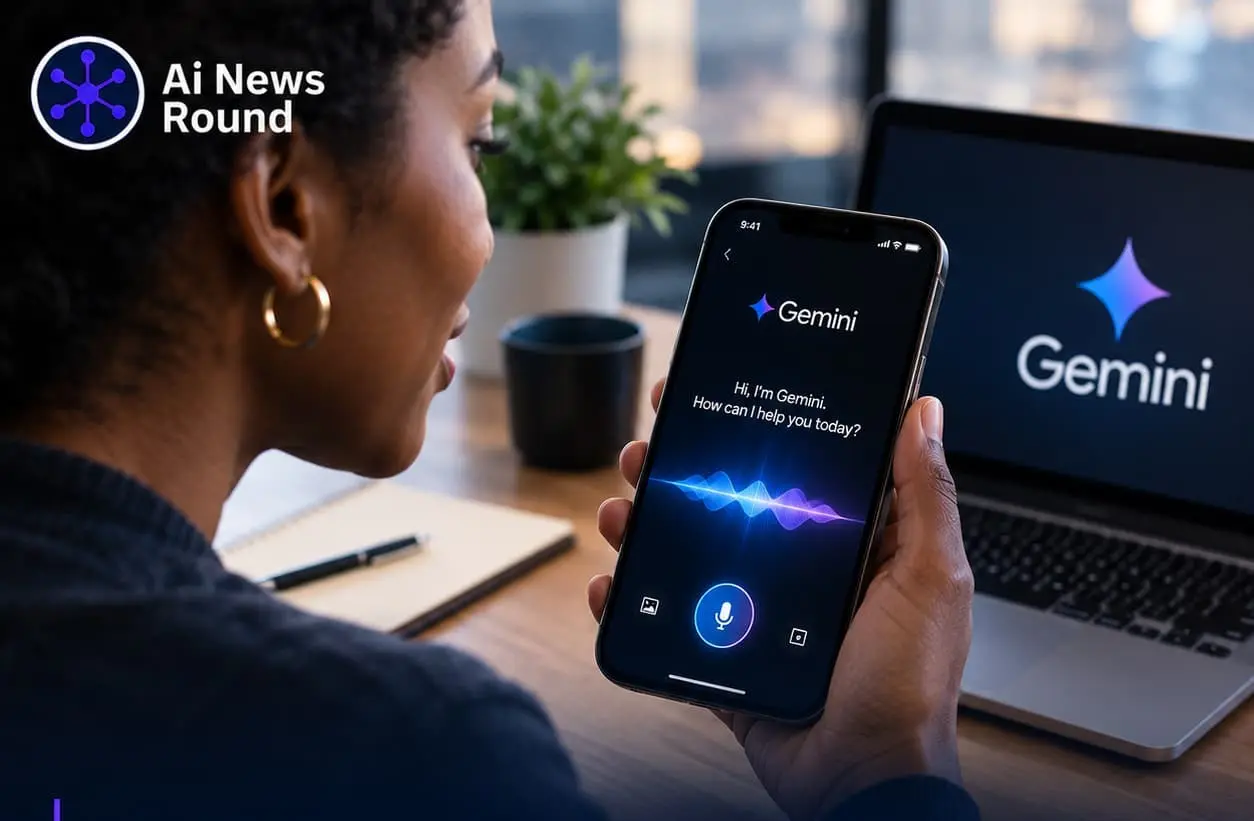
Google has officially released Gemini 3.8 Live and Gemini 3.8 Live Extended Thinking, marking a functional upgrade to its real time speech models. The release focuses on combining conversational fluid dialogue with parallel background reasoning, enabling voice agents to manage complex background tasks without pausing live interactions. Gemini 3.8 Live is engineered primarily for scale and operational cost efficiency, pricing audio interactions competitively to support broad enterprise adoption. It incorporates low latency voice processing, real time visual grounding, and automatic language detection across 97 supported languages during active conversations.
According to technical documentation published on the Google Blog, the system allows users to share live visual feeds directly from their devices while maintaining natural spoken dialogue. For instance, a user can point a smartphone camera at a complex mechanical or software issue while engaging in natural, bidirectional spoken troubleshooting without experienced latency spikes.
Parallel Reasoning and Multi Step Execution
For complex enterprise workflows, Gemini 3.8 Live Extended Thinking enables simultaneous speech generation and deep problem solving. Rather than pausing speech or forcing awkward silences while running background API calls, the model utilizes verbal fillers such as natural introductory cues and live progress narration while executing multi step tasks in the background. This structural separation allows a user to continue conversing naturally while the AI processes asynchronous external functions.
On technical benchmarks verified by independent analysis, Gemini 3.8 Live Extended Thinking secured the top spot on Artificial Analysis Speech to Speech Quality Index with an overall score of 82.6. The model also recorded 97.7 percent on Big Bench Audio and achieved 68.6 percent on the tau Voice agentic evaluation, demonstrating strong multi step task execution compared to previous generation systems.
Enterprise Integration, Developer Support, and Audio Safety
To support widespread production deployment, Google has made both models available via the Gemini API, Google AI Studio, and enterprise platforms like Google Workspace. Developer platforms such as LiveKit, Vercel, and LangChain are integrating the Live API to help engineers build real time media streaming applications. Initial enterprise partners testing the capabilities include Salesforce, Genspark, and Lumeris. Similar shifts toward autonomous system management were recently covered in our analysis of Perplexity and GPT 6 Astra.
To maintain visual and acoustic safety, Google has integrated SynthID audio watermarking directly into generated speech outputs. This imperceptible watermark is woven into the audio stream to identify synthetic media and prevent unauthorized voice cloning or misuse across public communication channels.
System Architecture and Developer Workflows
Building with Gemini 3.8 Live Extended Thinking introduces an asynchronous reasoning protocol that fundamentally alters how client applications handle server state management. Traditional voice systems rely on simple turn completion signals to determine when a model is idle and ready for user input. In contrast, the Extended Thinking model processes tool calls and background logic asynchronously, meaning client applications must continuously monitor interaction status signals to distinguish between active background execution and session idle states.
Developers can configure background reasoning levels dynamically through dedicated API settings, selecting appropriate depth thresholds based on task complexity. Furthermore, client applications retain the ability to interrupt active model generations at any point during a stream, allowing human users to redirect complex workflows instantly without waiting for background reasoning loops to complete.