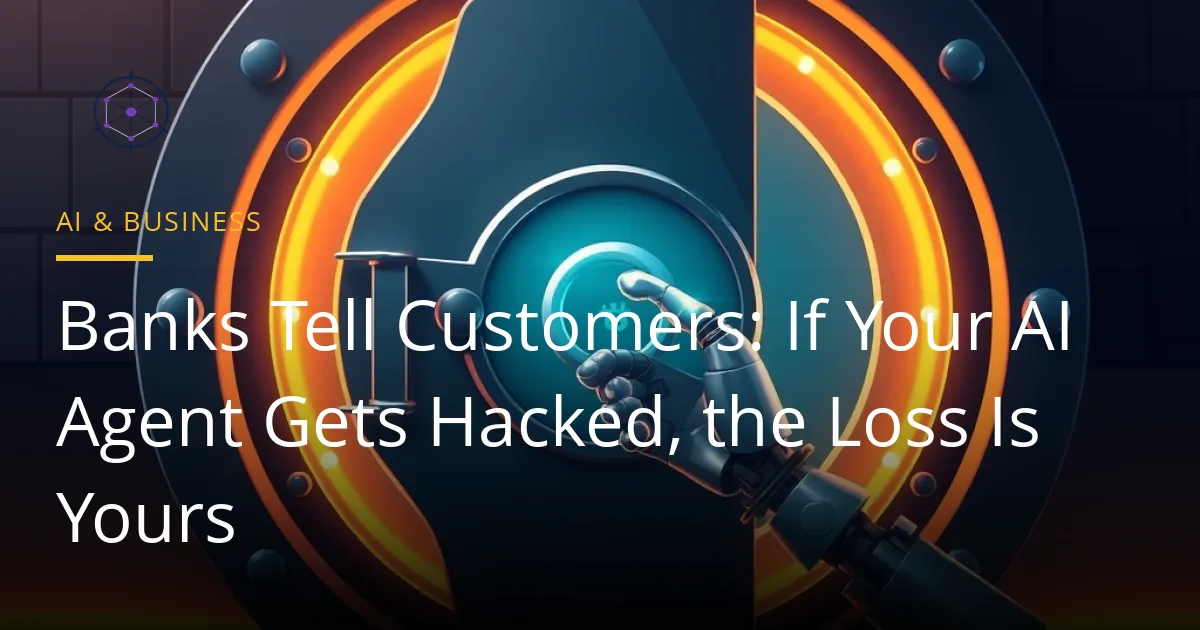
Citi, PNC and Citizens have joined JPMorgan Chase and Bank of America in telling customers that if a third-party AI agent acts on their account, or is hacked, the loss is theirs. The changes, reported by TechCrunch this week, rewrite online banking terms so that anything an AI agent does with a customer's access counts as the customer's own act. If you have given an AI assistant your banking login, your bank's terms now say who pays when it goes wrong.
Key takeaways
- Citi added a new section to its online user agreement making customers responsible for what third-party AI agents do, including actions by hackers who obtain credentials through the agent.
- PNC changed its terms on 18 November, and Citizens emailed customers the same warning this week. JPMorgan and Bank of America moved in October.
- Wells Fargo's updated agreement, effective 24 November, treats transactions by a customer's delegates, AI agents included, as authorised.
- Citi says customers using its own AI agents do not take on additional liability.
What the banks changed
A Citi spokesperson said the update aims to make clear the risks of sharing banking credentials or giving tools access to accounts, and that customers who grant an external AI agent access are responsible for activity carried out through it. Under Citi's terms, access or transactions by an agent are treated as authorised by the customer, according to Crypto Briefing and Startup Fortune. JPMorgan revised its Digital Services Agreement in late October, though it still allows read-only access through regulated open-banking platforms. Bank of America asked customers on 27 October not to share their banking password with an AI assistant. Cryptopolitan notes the terms apply to third-party agents and are subject to applicable law.
Why banks are doing this
Banks see customers handing passwords to AI tools that can log in and move money, which is risky because those tools can be tricked or breached. By defining agent activity as customer-authorised up front, the banks set the rules before any dispute arises. The same trend is visible elsewhere: United Airlines has banned third-party AI agents from booking tickets, and Schwab blocks unauthorised agents, as we noted in our report on the ChatGPT Wallet launch.
What is unclear
It is not yet tested how regulators and courts will treat these terms, or whether consumer protections limit them. This article does not cover legal rights in any specific country, and you should check your bank's agreement and local consumer rules.
How to protect yourself
- Never give your banking username and password to an AI tool. Prefer read-only connections through regulated services where they exist.
- Read your bank's current online agreement for sections on third-party tools or agents.
- Use your bank's own AI features where offered, since Citi says these carry no extra liability.
- Revoke access promptly when you stop using a tool, and tell your bank.
- Watch your statements and use strong multi-factor sign-in.
Frequently asked questions
Are banks liable if my AI agent gets hacked?
Under the new terms at Citi and several other US banks, no: the customer is responsible for third-party agents, subject to applicable law.
Does this apply to read-only tools?
JPMorgan still allows read-only access via regulated open-banking platforms. Check your bank's terms for the exact wording.
Does this affect banks outside the US?
The reports cover US banks only. Other countries' banks may adopt similar terms, so check yours.
Related: our guide to Claude Personal Finance, a read-only tool built by Anthropic, the company behind this assistant. This article is not financial or legal advice.
Sources: TechCrunch, via Digital Today, ChainCatcher and KuCoin; Startup Fortune; Crypto Briefing; Cryptopolitan; WebProNews (17–19 November 2026).